

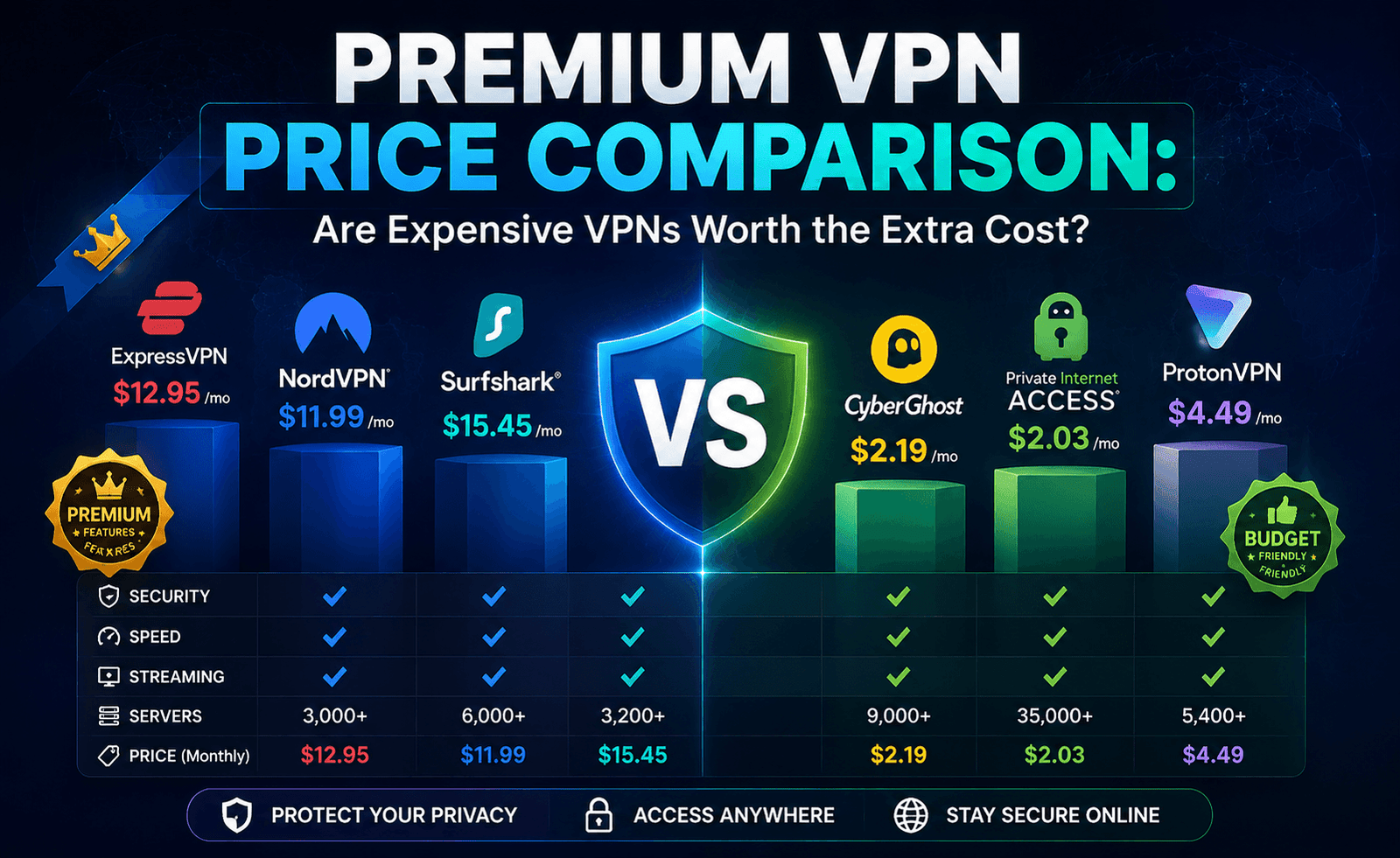
At the top of every VPN provider’s pricing page sits the premium tier — the plan bundled with extra tools, higher device limits, and a price tag that can run three to five times higher than the entry-level option. Is that extra cost actually justified, or is it largely a markup on the same underlying VPN tunnel? This report compares premium VPN pricing against mid-range and budget tiers to see exactly what the higher price buys.
What “Premium” Typically Means in 2026
Premium VPN plans generally sit in the $8 to $13+ per month range on standard billing, or noticeably higher on monthly-only plans. At this tier, providers typically bundle several tools beyond the core VPN tunnel: password managers, encrypted cloud storage, dark web monitoring, antivirus scanning, and sometimes identity-theft insurance or recovery services. The core encryption tunnel itself — AES-256 with a modern protocol — is rarely different from what budget tiers offer; the price increase is driven almost entirely by these bundled extras and, in some cases, a larger or more consistently fast server network.
Premium vs Mid-Range vs Budget: A Direct Comparison
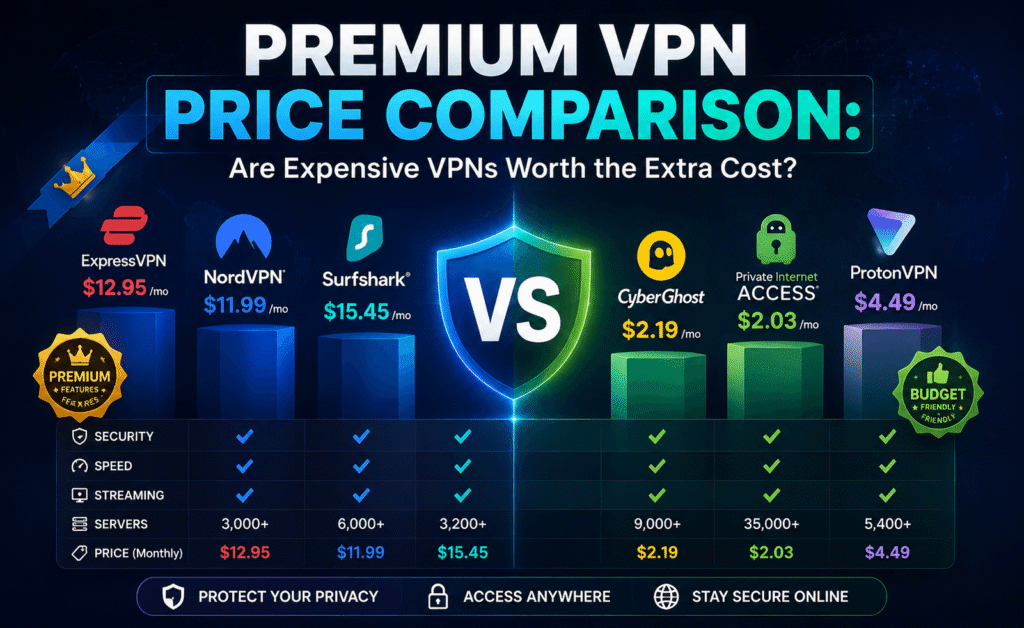
| Tier | Typical Monthly Price | What’s Usually Included |
|---|---|---|
| Budget | $1.50 – $4 | Core VPN tunnel, standard encryption, moderate server count |
| Mid-range | $4 – $8 | Core VPN tunnel plus one or two bundled tools (ad blocker, split tunneling) |
| Premium | $8 – $13+ | Full bundle: password manager, cloud storage, dark web monitoring, dedicated IP options, priority support |
What You’re Actually Paying For at the Premium Tier
Bundled Security Tools
The single biggest driver of premium pricing is the bundle. A standalone password manager typically costs a few dollars a month on its own; several gigabytes of encrypted cloud storage carries its own separate subscription cost elsewhere; identity-theft monitoring services often charge a comparable monthly fee independently. When a premium VPN plan bundles all three alongside the VPN itself, the combined price can genuinely undercut buying each service separately — provided you would have paid for those tools anyway.
Server Network Depth and Consistency
Premium tiers from top providers tend to maintain larger, more frequently refreshed server fleets, which can translate into more consistent speeds during peak hours and better performance for demanding tasks like 4K streaming or large file transfers. Budget tiers from the same provider often use the same underlying network, but premium subscribers may get priority routing or access to specialized server types (obfuscated servers, double-VPN, dedicated IP servers) that aren’t available on lower tiers.
Support and Account Recovery
Premium plans frequently include faster, more direct customer support channels and — in the case of identity-protection bundles — active recovery assistance if your information is compromised in a data breach. This is difficult to value precisely, but for users who’ve dealt with identity theft before, it’s often the single most valued part of a premium bundle.
Who Actually Needs the Premium Tier
- Remote workers handling sensitive data — the combination of a dedicated IP, priority support, and stronger audit history can matter more when a VPN is part of a professional security setup rather than personal browsing.
- Users who would otherwise pay for the bundled tools separately — if you’re already planning to subscribe to a password manager and cloud storage service, a premium VPN bundle can consolidate those costs into one bill for less than the sum of the parts.
- Frequent international travelers — larger, more consistently maintained server networks tend to perform better in regions with more restrictive networks or higher general internet congestion.
- Anyone who has previously experienced identity theft — the monitoring and recovery services bundled into top-tier premium plans are most valuable to users who place a high priority on that specific protection.
Who Can Skip the Premium Tier
- Casual streaming and browsing users — if your primary use case is unblocking streaming content or securing public Wi-Fi occasionally, a mid-range or even budget plan typically covers the core need without the extra cost.
- Users who already have separate security tools — if you’re already subscribed to a dedicated password manager and cloud storage service you’re happy with, paying again for bundled versions inside a premium VPN plan is redundant spending.
- Single-device users — several of the premium tier’s advantages (dedicated IPs, larger device allowances, priority routing across many servers) matter less if you’re only protecting one device.
Is the Core VPN Protection Actually Better on Premium Plans?
This is the most important question, and the honest answer is: usually not by much. The fundamental encryption tunnel — protocol, cipher strength, and leak protection — tends to be identical across a provider’s tiers. What changes is everything around that tunnel: bundled tools, server access, device limits, and support quality. If your only goal is basic traffic encryption, a mid-range or even budget plan from a reputable provider generally delivers comparable core protection to the premium tier from the same company.
Frequently Asked Questions
Is a premium VPN more secure than a budget VPN from the same company?
The core encryption is typically the same across tiers from a single provider. The premium tier adds extra tools and services around that core protection rather than strengthening the tunnel itself.
Do premium VPN bundles actually save money compared to buying each tool separately?
Often yes, if you would have purchased the bundled tools independently anyway. If you don’t need a password manager or cloud storage, you’re effectively paying for features you won’t use.
Is it worth switching from a budget plan to premium mid-subscription?
Only if you’ve identified a specific bundled feature you need — a dedicated IP, more storage, or identity monitoring, for example. Upgrading purely for a marginally larger server network rarely justifies the price jump on its own.
Calculating Your Own Break-Even Point
Rather than relying on a generic recommendation, it’s worth running a quick personal calculation before choosing between a premium plan and a lighter tier. Add up what you currently pay, or would expect to pay, for a standalone password manager, cloud storage plan, and any identity-monitoring service you’re considering separately. Compare that combined total against the price difference between a mid-range VPN plan and the premium tier of the same provider. If the standalone tools would cost more together than the premium VPN upgrade, the bundle is a genuine saving. If you wouldn’t have purchased those tools separately at all, the premium tier is effectively a markup on features you won’t use.
Premium Tiers and Business or Small Team Use
Premium pricing looks different in a small business context than it does for personal use. Dedicated IP addresses, for example, are far more valuable to a small team that needs consistent access to region-locked business tools or wants to reduce CAPTCHA friction on shared services, compared to an individual user browsing casually. Priority support channels also carry more weight for a business that can’t afford extended downtime troubleshooting a connectivity issue. For team or business use cases specifically, the premium tier’s price premium is easier to justify than for a single personal device.
Watching for Premium Tier Feature Overlap
One subtle issue worth checking before upgrading to a premium plan: some of the tools bundled into a premium VPN tier may already be included for free in software or services you use elsewhere. Many modern web browsers and operating systems now include a basic built-in password manager, and several email providers already offer some form of dark web or breach monitoring at no extra cost. Before paying a premium markup for a bundled feature, it’s worth briefly checking whether an equivalent tool is already available to you elsewhere at no additional cost.
How to Decide Without Overpaying
A practical approach we recommend: start on a mid-range plan from a reputable, independently audited provider, and only upgrade to premium once you’ve identified a specific, recurring need — a dedicated IP for consistent remote access, meaningful cloud storage you’re actually using, or active identity-monitoring you value — rather than upgrading preemptively based on marketing language alone. This keeps your VPN spending tied to features you’re genuinely using rather than to the assumption that a higher price always means better protection.
A Note on Premium Pricing and Loyalty Discounts
Existing subscribers on a premium plan sometimes have room to negotiate a better renewal rate simply by asking, particularly if they mention comparable pricing from a competitor. This isn’t guaranteed across every provider, but it’s a low-effort step worth taking before a renewal charge lands, especially at the premium tier where the absolute dollar difference between the introductory and renewal rate tends to be largest.
Final Thoughts
Premium VPN pricing buys you a bundle, not a fundamentally stronger VPN tunnel. Whether that bundle is worth the extra cost depends entirely on whether you’d use — and would otherwise pay for — the tools packaged alongside it. For users who need those extras, premium tiers can genuinely save money overall. For users who just need reliable encryption, a mid-range or budget plan from a reputable, audited provider usually delivers the same core protection for considerably less.